 +966 50 444 4872


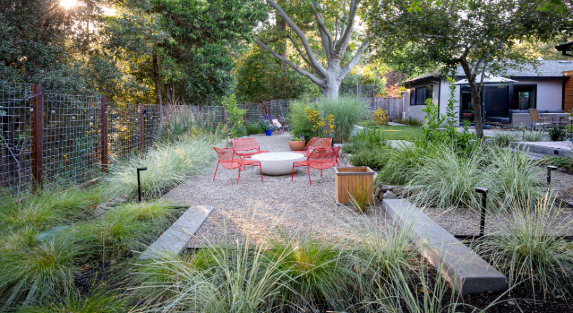
Common Hardscape Landscaping Mistakes to Avoid in Saudi Arabia
9 September, 2026
Creating an attractive outdoor space in Saudi Arabia takes more than choosing beautiful paving, stone, seating areas, or decorative features. The region's intense heat, strong sunlight, dust, occasional heavy rainfall, and demanding outdoor conditions can significantly influence how a hardscape performs over time.
Whether you are developing a private villa, commercial property, hotel, resort, office, or large-scale development, thoughtful planning is essential. A poorly designed hardscape may look impressive when newly installed but can become difficult to maintain if the materials, drainage, layout, or construction methods are not suited to the local environment.
This is why professional hardscape landscaping Saudi Arabia services focus on more than appearance. Good hardscape design considers durability, functionality, climate, maintenance, safety, and the long-term needs of the property.
For property owners planning hardscape landscaping Riyadh projects in particular, avoiding common design and installation mistakes can make a significant difference to the performance and appearance of an outdoor space.
What Is Hardscape Landscaping?
Hardscape landscaping refers to the non-living elements incorporated into an outdoor landscape.
These can include:
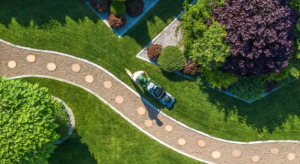
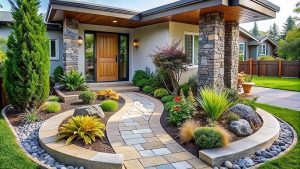
- Paved walkways
- Driveways
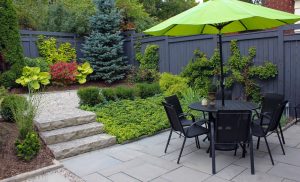
- Patios
- Outdoor seating areas
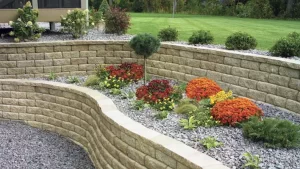
- Retaining walls
- Garden walls
- Steps
- Outdoor kitchens
- Pergolas
- Decorative stone
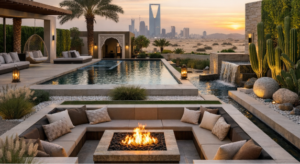
- Pool surrounds
- Water features
- Landscape edging
- Outdoor structures
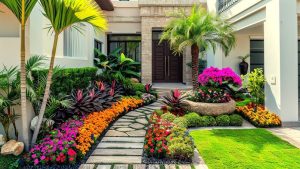
Hardscaping works alongside soft landscaping elements such as trees, shrubs, flowers, and lawns to create a complete outdoor environment.
In Saudi Arabia, effective hardscape design needs to account for the relationship between these elements and the local climate.
Why Hardscape Planning Matters in Saudi Arabia
Saudi Arabia presents specific challenges for outdoor landscaping.
High temperatures and prolonged exposure to sunlight can affect certain materials. Dust and sand can accumulate on surfaces. Poor drainage can create problems during periods of heavy rainfall, while inadequate shade can make outdoor areas uncomfortable during hotter months.
For this reason, hardscape landscaping in Saudi Arabia should be planned around the actual property, intended use, local environmental conditions, and expected maintenance requirements.
Here are some common mistakes property owners should avoid.
One of the most common mistakes is selecting hardscape materials solely because they look attractive.
1. Choosing Materials Based Only on Appearance
A material may look excellent in a showroom but perform differently when exposed to intense heat, direct sunlight, dust, moisture, and frequent outdoor use.
When choosing paving, stone, tiles, or other materials, consider:
- Durability
- Heat exposure
- Slip resistance
- Surface characteristics
- Maintenance requirements
- Expected foot traffic
- Cleaning requirements
- Compatibility with the surrounding design
A professional landscape designer can help balance aesthetics with practical performance.
2. Ignoring Saudi Arabia's Climate
A hardscape design that works well in another climate may not necessarily be appropriate for Saudi conditions.
This is particularly important for hardscape landscaping Riyadh, where outdoor spaces can experience significant heat and sunlight.
Designers should consider how the selected materials and layout will perform under local conditions rather than simply copying an outdoor design from another region.
Climate-responsive design can involve appropriate material selection, shade planning, drainage considerations, and thoughtful positioning of outdoor spaces.
3. Poor Drainage Planning
Drainage is one of the most important—and frequently overlooked—aspects of hardscape landscaping.
Many people associate Saudi Arabia primarily with dry conditions, but intense rainfall can occur, and poorly planned outdoor areas can experience water accumulation.
Insufficient slopes, blocked drainage channels, inappropriate paving layouts, or inadequate water-management planning can lead to:
- Standing water
- Surface deterioration
- Soil erosion
- Staining
- Damage to surrounding landscape elements
- Uncomfortable or unsafe walking areas
Professional hardscape landscaping Saudi Arabia projects should incorporate appropriate drainage planning from the design stage.
4. Creating Large Areas Without Shade
A visually impressive outdoor space may not necessarily be comfortable to use.
Large paved areas exposed directly to the sun can become extremely uncomfortable during hot periods.
This is particularly relevant for residential patios, hospitality properties, commercial outdoor spaces, and villa gardens.
Consider incorporating suitable shade solutions such as:
- Pergolas
- Canopies
- Covered seating areas
- Strategically positioned trees
- Architectural shade structures
Shade should be considered as part of the overall design rather than added after the hardscape has already been completed.
5. Neglecting Surface Temperature
Outdoor surfaces can become significantly hotter under direct sunlight.
Choosing surfaces without considering how they will feel underfoot can negatively affect the usability of patios, pool areas, pathways, and recreational spaces.
For areas where people regularly walk or spend time outdoors, surface characteristics should be considered carefully.
Material selection should balance appearance, durability, maintenance, and comfort.
6. Poorly Designed Walkways and Circulation
A hardscape should support how people actually move through a property.
A walkway that looks attractive on a drawing may not work well in real life if it is too narrow, unnecessarily complicated, poorly positioned, or disconnected from important areas.
Before finalizing the design, consider the natural movement between:
- Entrances
- Parking areas
- Buildings
- Gardens
- Pools
- Seating areas
- Outdoor kitchens
- Recreational spaces
Good landscape planning makes movement intuitive rather than forcing people to take unnecessary routes.
7. Failing to Consider Maintenance
Some hardscape designs look impressive but require significant ongoing maintenance.
Dust, sand, stains, debris, and general outdoor exposure mean that surfaces in Saudi Arabia need practical maintenance planning.
Before selecting materials or features, consider:
- How easily the surface can be cleaned
- Whether replacement materials will be available
- How joints will be maintained
- Whether drainage areas can be accessed
- How frequently the area will be used
- Whether specialized cleaning is required
A good hardscape landscaping company in Saudi Arabia should consider long-term maintenance rather than focusing only on initial installation.
8. Using Too Many Design Elements
Hardscape design can become visually overwhelming when too many materials, patterns, colors, structures, and decorative elements are combined.
For villas and luxury properties, there can be a temptation to include everything at once.
However, effective landscaping often comes from balance.
A well-planned design can use a limited number of complementary materials and repeat visual elements throughout the property.
The result can feel more cohesive and sophisticated without sacrificing functionality.
9. Forgetting About Drainage Around Buildings
Water management is particularly important around building entrances, foundations, walls, and other structures.
Hardscape surfaces should be planned so that water does not unnecessarily accumulate against buildings.
This requires careful consideration of grading, drainage routes, surface levels, and connections between hardscape areas and existing structures.
Drainage should be treated as a fundamental part of the design rather than a last-minute construction detail.
10. Poor Installation and Base Preparation
Even high-quality materials can perform poorly if they are installed on an inadequate base.
The underlying preparation can influence the stability and long-term performance of paved areas and other hardscape features.
Poor preparation may contribute to:
- Uneven surfaces
- Settlement
- Cracking
- Loose paving
- Joint deterioration
- Water accumulation
Professional installation should follow appropriate construction practices for the selected material, site conditions, and intended application.
11. Ignoring Future Landscaping Growth
Hardscape and softscape should be planned together.
Trees and other plants can change significantly as they mature. Their roots, branches, shade patterns, and maintenance requirements can influence nearby hardscape elements.
When designing outdoor areas, consider the mature size and location of vegetation rather than designing only around its appearance immediately after installation.
This can help reduce future conflicts between plants, paving, walls, pathways, and structures.
12. Not Planning for Outdoor Lighting
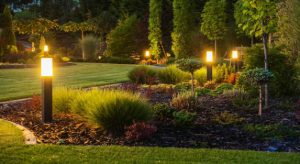
Lighting is often treated as an optional finishing element, but it can significantly influence how a hardscape is used after sunset.
Appropriate lighting can improve visibility and highlight:
- Pathways
- Steps
- Driveways
- Architectural features
- Garden walls
- Seating areas
- Water features
- Entrances
Lighting should be integrated into the design early enough to coordinate with the hardscape layout and electrical requirements.
13. Choosing a Design That Does Not Match the Property
A hardscape should complement the architecture and overall character of the property.
For example, an ultra-modern hardscape may feel disconnected from a traditional architectural style if there is no visual relationship between the two.
The best designs consider:
- Building architecture
- Existing colors
- Materials
- Property size
- Surrounding landscape
- Intended use
- Owner preferences
This creates a more unified outdoor environment.
14. Focusing Only on the Initial Cost
Budget is naturally an important consideration in any landscaping project.
However, selecting the cheapest materials or contractor without considering quality, installation standards, maintenance, and durability can increase long-term costs.
A better approach is to evaluate the overall value of the project.
Consider:
Initial Cost + Installation Quality + Maintenance + Durability + Replacement Requirements
A professionally planned hardscape may provide better long-term value even when the initial investment is higher.
15. Trying to Copy Designs Without Adapting Them to the Site
Online platforms provide endless landscaping inspiration.
However, copying a design exactly can be problematic because every property has different dimensions, drainage conditions, architectural features, climate exposure, access requirements, and usage patterns.
Use inspiration as a starting point rather than a blueprint.
A professional hardscape landscape design in Saudi Arabia should be customized to the actual site.
Hardscape Landscaping Riyadh: Why Local Planning Matters
Riyadh presents a unique environment for outdoor design.
A successful hardscape landscaping Riyadh project should consider local climatic conditions, property architecture, intended use, material performance, shade, drainage, and maintenance requirements.
Whether the project involves a residential villa, commercial property, hospitality venue, or large development, local site conditions should influence the design decisions.
This is particularly important when selecting materials and designing outdoor spaces intended for regular use.
How to Plan a Successful Hardscape Landscaping Project
Avoiding common mistakes starts with a structured planning process.
Step 1: Understand the Property
Assess the property's size, existing landscape, building layout, access points, drainage, and outdoor usage requirements.
Step 2: Define the Purpose
Determine whether the space is primarily intended for entertaining, relaxation, circulation, parking, recreation, hospitality, or a combination of uses.
Step 3: Establish the Design Concept
Choose a design direction that complements the architecture and overall landscape.
Step 4: Select Appropriate Materials
Evaluate materials based on durability, appearance, maintenance, safety, and suitability for the local environment.
Step 5: Plan Drainage and Levels
Address water movement and surface levels before construction begins.
Step 6: Integrate Shade and Lighting
Consider outdoor comfort and nighttime usability as part of the initial design.
Step 7: Work With Experienced Professionals
Professional designers and contractors can help identify potential issues before construction begins and develop solutions appropriate to the property.
Why Professional Hardscape Landscaping Services Are Worth Considering
A professional hardscape landscaping team brings together design, material knowledge, site planning, construction expertise, and project management.
Instead of treating paving, walls, lighting, drainage, planting, and outdoor structures as separate elements, professionals can coordinate them into a complete landscape.
This integrated approach can help create outdoor spaces that are:
- Visually attractive
- Functional
- Durable
- Easier to maintain
- Better suited to the local environment
- Aligned with the property's architecture
For large or complex projects, professional planning can also help reduce costly changes during construction.
Final Thoughts
Successful hardscape landscaping Saudi Arabia projects require more than attractive materials and impressive designs. The strongest results come from understanding the local environment and balancing aesthetics with functionality, durability, drainage, comfort, and long-term maintenance.
From selecting appropriate paving materials to planning shade, drainage, lighting, and circulation, every decision can influence how an outdoor space performs over time.
If you are planning hardscape landscaping Riyadh or a project elsewhere in Saudi Arabia, taking the time to plan properly can help you avoid common mistakes and create an outdoor environment that is both beautiful and practical.
Planning a Hardscape Landscaping Project in Saudi Arabia?
Whether you are developing a villa, commercial property, hotel, resort, office, or large-scale outdoor project, professional planning can make a significant difference.
Contact our landscaping team today to discuss your hardscape landscaping requirements. From design and material selection to installation and finishing, we can help create a durable, functional, and visually appealing outdoor space tailored to your property and Saudi climate.
- Fountain and Waterfalls
- Gardening
- hardscape
- Irrigation system
- Landscape
- Lawn
- Nursery
- Palm Tree
- Plantation and Maintenance
- softscape
- Tree Transplanting
- Washingtonian Tree
Categories
Latest Post
 .
.













- Fountain and Waterfalls
- Gardening
- hardscape
- Irrigation system
- Landscape
- Lawn
- Nursery
- Palm Tree
- Plantation and Maintenance
- softscape
- Tree Transplanting
- Washingtonian Tree